Port of Vancouver
Port Overview
The Port of Vancouver is Canada’s largest and most diversified port, and the undisputed West Coast gateway for shipping from China to Canada. Located on the southwest coast of British Columbia, the port handles over 3.6 million TEUs annually and roughly $270 billion CAD in trade each year — more than any other Canadian port. For importers sourcing from China, Vancouver offers the shortest ocean transit to Canada, extensive carrier coverage on trans-Pacific routes, and direct rail connections that move containers from ship to inland distribution hubs in days. For official schedules, tariffs and operational updates, visit the Port of Vancouver official website.
Why the Port of Vancouver Matters for China Importers
- Canada’s #1 Gateway: Handles over 3.6 million TEUs and approximately 160 million tonnes of cargo annually — more than double the volume of any other Canadian port.
- Shortest Transit from Asia: Direct sailings from Shanghai, Ningbo and Shenzhen reach Vancouver in 12–16 days, the fastest ocean route to any major Canadian port.
- Extensive Carrier Coverage: All three major shipping alliances (2M, Ocean Alliance, THE Alliance) operate multiple weekly services from Chinese ports, ensuring competitive rates and reliable space.
- Unmatched Rail Connectivity: Both Canadian Class 1 railways — CN and CPKC — serve the port directly, moving containers to Toronto, Montreal, Chicago and the US Midwest in 3–5 rail days.
- Diversified Trade Base: Beyond containers, the port is a major hub for grain, potash, coal, autos and cruise — insulating importers from single-commodity volatility.
- Strategic Expansion: Major capital projects including the Centerm Expansion and Second Roberts Bank Terminal (TRB2) will add over 2.4 million TEUs of capacity by 2030.
Key Facts at a Glance
| Metric | Value |
|---|---|
| Annual Container Volume | ~3.6 million TEUs |
| Total Cargo Tonnage | ~160 million tonnes annually |
| Total Trade Value | ~$270 billion CAD |
| Waterfront | 16,000+ metres of berth space |
| Container Terminals | 5 major terminals (3 container, 2 mixed-use) |
| Rail Connectivity | CN & CPKC direct on-dock rail |
| Key China Trade Lanes | Shanghai, Ningbo, Shenzhen, Qingdao, Xiamen |
Port Location
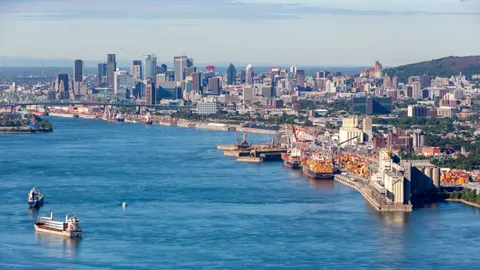
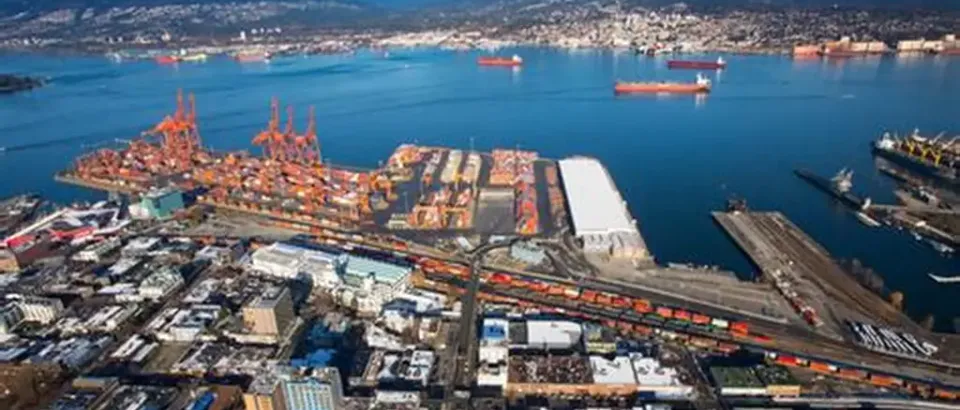
The Port of Vancouver stretches 27 kilometres along the south shore of Burrard Inlet and the Fraser River, in the heart of Metro Vancouver — Canada’s third-largest metropolitan area with 2.6 million residents. Its strategic location on the Pacific Rim makes it the closest major North American port to Asia west of Seattle, and the natural first landfall for transpacific services.
Service Region
- Immediate market: Metro Vancouver’s 2.6 million consumers, plus the broader British Columbia economy, are reachable within hours by truck.
- National reach: CN and CPKC rail networks connect Vancouver to every major Canadian market — Toronto and Montreal in 4–5 rail days, and the US Midwest (Chicago, Memphis) in 5–6 days via both railways.
- Prairie & Alberta connection: Calgary and Edmonton — home to Canada’s energy and agricultural sectors — are served by daily rail departures, making Vancouver the preferred gateway for Western Canadian importers.
- US Pacific Northwest cross-border: Proximity to the Washington state border allows efficient transloading and cross-border trucking for US-bound cargo.
Port Terminals
The Vancouver Fraser Port Authority (VFPA) oversees a landlord-port model: the authority owns the land and infrastructure while private operators lease and manage terminal operations. The port operates three primary container terminals plus two mixed-use terminals.
Major Container Terminals
-
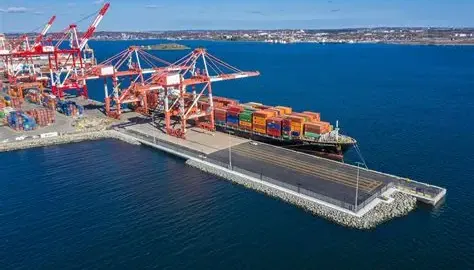
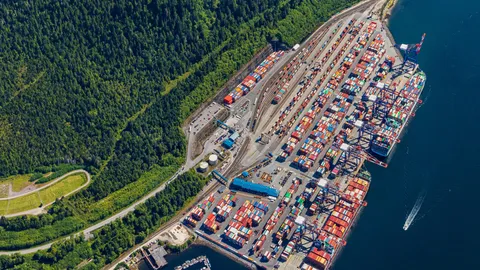
Deltaport (DP World): The port’s largest container terminal, located at Roberts Bank. With over 1.8 million TEUs of annual capacity, it features 14 ship-to-shore cranes, deep-water berths up to 16 metres, and on-dock rail with direct CN and CPKC access. It handles the largest vessels on the trans-Pacific trade and serves as the primary call for major alliance services from China.
-
Centerm (GCT Global Container Terminals): A $300 million expanded facility in Burrard Inlet with annual capacity exceeding 1.5 million TEUs. Features 7 ship-to-shore cranes, 24-hour gate operations, and on-dock rail. The recent expansion added 15,000 TEUs of on-terminal storage and upgraded berths to handle vessels up to 14,000 TEU.
-
Vanterm (GCT Global Container Terminals): A versatile terminal in East Vancouver handling containers, breakbulk and project cargo. With 5 berths and on-dock rail, it serves as critical overflow capacity and a hub for specialized cargo.
-
Fraser Surrey Docks: A mixed-use terminal on the Fraser River handling containers, breakbulk and steel products. Serves as an important secondary facility for container overflow and project cargo during peak season.
All container terminals feature on-dock or near-dock rail access, enabling vessel-to-railcar transfers that bypass truck drayage and move containers inland in days rather than weeks.
Shipping Routes to This Port
Vancouver is the first port of call for most transpacific services, served by near-daily sailings from China’s top container ports across all three major carrier alliances.
From Shenzhen (Yantian / Shekou)
Yantian is typically the last South China port of call before vessels cross the Pacific, making Shenzhen one of the fastest origins to Vancouver. Multiple weekly sailings operate via COSCO, OOCL, Evergreen and CMA CGM, with transit times of approximately 13–16 days.
From Shanghai
Shanghai — the world’s busiest container port — is the single largest origin for Vancouver-bound cargo, with near-daily sailings across all three alliances. As the gateway for the Yangtze River Delta manufacturing heartland, Shanghai offers maximum schedule frequency and competitive rates.
From Ningbo
Ningbo-Zhoushan is frequently paired with Shanghai on the same vessel rotation, providing consistent weekly capacity from the Yangtze River Delta. A major export hub for machinery, textiles and consumer goods, Ningbo offers competitive rates across all alliance service strings.
From Qingdao and Other Ports
Qingdao is called on transpacific loops alongside Shanghai or Ningbo, serving northern Chinese manufacturing hubs including Shandong, Hebei and Tianjin. Secondary ports including Xiamen, Dalian and Tianjin connect to Vancouver via feeder services through Shanghai, Ningbo or transshipment hubs, adding 2–5 days to total transit.
Transit Time from China to Vancouver
Vancouver offers the fastest Pacific crossing of any Canadian gateway:
| Origin Port | Transit Time to Vancouver | Sailing Frequency |
|---|---|---|
| Shanghai | 12–15 days | Daily |
| Ningbo | 13–15 days | Daily |
| Shenzhen (Yantian) | 13–16 days | Daily |
| Qingdao | 14–17 days | 4–5 per week |
| Xiamen | 15–18 days | 2–3 per week |
Actual transit times vary by carrier service tier, seasonal weather and port conditions. Express services can trim 1–3 days off standard schedules. For LCL (Less-than-Container-Load) shipments, add 3–5 days for consolidation and deconsolidation. Port congestion is a material risk during peak season (August–October) and labour negotiations — importers should build buffer time into supply chain planning.
Shipping Cost from China to Vancouver
Ocean freight rates from China to Vancouver are shaped by market dynamics, carrier pricing and port-side charges. Understanding these cost drivers helps importers budget accurately and identify savings.
Factors Affecting Freight Rates
- Seasonality: Peak season (August–October) rates can increase 30–50%. Chinese New Year (January/February) creates a pre-holiday rush followed by a post-holiday rate dip — often the most cost-effective booking window.
- Container type and size: 40’ standard containers offer the best per-unit economics. High-cube, 20’ and specialized equipment (reefer, open-top, flat-rack) command premiums.
- Service level: Standard trans-Pacific service vs. expedited or priority-loading options differ substantially. Premium services guarantee equipment availability and vessel space during peak season.
- Port fees: Vancouver charges wharfage, dockage and container-related terminal fees. Budget $200–$350 per container depending on timing, terminal and cargo type.
How to Lower Your Shipping Costs
| Strategy | Potential Impact |
|---|---|
| Ship FCL instead of LCL | 30–50% lower per-unit freight cost |
| Book during off-peak (March–July) | 20–40% rate reduction |
| Pre-clear Canadian customs documentation | Avoid demurrage at $150–$300/day |
| Use on-dock rail to inland destinations | Eliminate drayage, reduce door-to-door transit cost |
| Consolidate with a China-based forwarder | Access to volume-negotiated carrier rates |
Partnering with a China-based freight forwarder like DANTFUL gives importers access to competitive carrier contracts, consolidated rates and expert guidance on Vancouver terminal procedures and Canadian customs clearance.
Warehousing Services
The Vancouver region is Western Canada’s largest warehousing and distribution market, anchored by industrial clusters in Richmond, Delta and Surrey.
Bonded Warehousing
Canada’s Customs Bonded Warehouse program allows importers to store goods without immediate payment of duties and taxes. Duties are deferred until goods leave the bonded facility for domestic consumption — valuable for seasonal inventory, quality inspections and value-added processing (labeling, kitting, repackaging) before final distribution.
Overseas Warehousing & 3PL
Metro Vancouver offers comprehensive third-party logistics services for China-to-Canada importers:
- Container deconsolidation and transloading from 40’ ocean containers into 53’ domestic trailers
- Amazon FBA preparation and direct-to-fulfillment-center delivery
- Pick-and-pack e-commerce fulfillment with same-day order processing
- Cross-docking and e-commerce returns processing
Warehousing & Distribution Strategy
For importers, warehousing near Vancouver delivers key advantages: faster container turnaround avoids per-diem charges, transloading from 40’ ocean containers into 53’ domestic trailers cuts inland trucking costs, and same-day delivery is available across the Lower Mainland. For Eastern Canadian markets, combining Vancouver’s fast ocean transit with CN/CPKC rail service often beats all-water routes through the Panama Canal.
DANTFUL partners with vetted warehouses across the Vancouver metro area, offering end-to-end logistics including inventory management, FBA prep, labeling, kitting and last-mile delivery coordination.
Frequently Asked Questions
Q: Is Vancouver the best Canadian port for shipping from China?
A: For most China imports, yes. Vancouver offers the shortest ocean transit (12–16 days from major Chinese ports), the most frequent sailings and the strongest rail connectivity to all Canadian markets. The main exception is cargo destined for Quebec and Atlantic Canada, where importers may prefer all-water service to Montreal or Halifax to save inland freight.
Q: How long does customs clearance take at the Port of Vancouver?
A: With properly pre-filed documentation through CBSA’s Single Window system, customs release typically takes 1–3 business days. Importers enrolled in Canada’s PARS (Pre-Arrival Review System) and CARM (CBSA Assessment and Revenue Management) programs benefit from faster clearance and reduced inspection rates.
Q: What is the cheapest way to ship from China to Vancouver?
A: FCL (Full Container Load) ocean freight during off-peak season (March–July) is most cost-effective. For shipments under 15 cubic meters, LCL may be more economical despite higher per-unit rates.
Q: How does Vancouver compare to Prince Rupert?
A: Vancouver is far larger (3.6M vs ~1.6M TEUs) with more sailings and dual-rail redundancy (CN + CPKC). Prince Rupert is closer to Asia by 1–2 days and less congested, but served only by CN rail. For most importers, Vancouver offers better frequency and flexibility; Prince Rupert is a strong alternative during Vancouver congestion periods.
Q: Can I ship to Amazon FBA through Vancouver?
A: Yes. Vancouver is the preferred West Coast gateway for Amazon FBA inventory destined for Western Canadian fulfillment centers. Your forwarder ships LCL/FCL to the port, clears customs and trucks to FBA facilities in the Lower Mainland or beyond.