Port of Halifax
Port Overview
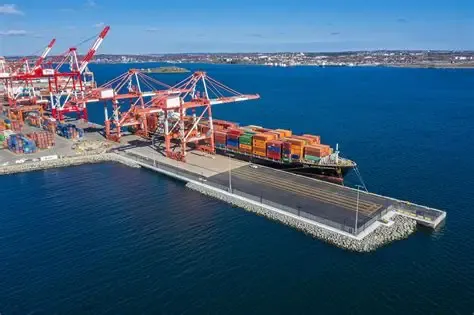
The Port of Halifax is Canada’s deep-water East Coast gateway and the closest major North American port to Europe, handling over 600,000 TEUs annually. Located on the Atlantic coast of Nova Scotia, Halifax has been a maritime hub for over 275 years and today serves as a strategic alternative for shipping from China to Canada — particularly for cargo destined for Atlantic Canada, Quebec or the US Northeast. Its naturally deep, ice-free harbour (up to 18 metres) accommodates the largest container vessels afloat, including ultra-large 24,000 TEU class ships that many other East Coast ports cannot handle. With direct CN rail connections to Montreal, Toronto and the US Midwest, Halifax combines deep-water access with reliable inland connectivity. For official schedules, tariffs and operational updates, visit the Port of Halifax official website.
Why the Port of Halifax Matters for China Importers
- Deep-Water Advantage: Natural depths up to 18 metres with no tidal restrictions, accommodating the largest vessels afloat — including ultra-large 24,000 TEU class ships.
- Ice-Free Year-Round: Located on the open Atlantic, Halifax operates 365 days a year with no icebreaker support needed, unlike the St. Lawrence ports.
- Fastest to North America’s East: As the closest North American port to Europe, Halifax offers competitive transit for services routed via the Suez Canal.
- CN Rail Connectivity: Direct CN rail connections reach Montreal (1–2 days) , Toronto (2–3 days) and the US Midwest without transloading.
- Congestion Alternative: As a smaller, efficient port, Halifax offers lower congestion and faster vessel turnaround than the mega-ports.
- Container Terminal Expansion: The South End Container Terminal has been expanded to 1.8 million TEUs of capacity — nearly three times current volumes — providing ample room for growth.
Key Facts at a Glance
| Metric | Value |
|---|---|
| Annual Container Volume | ~600,000 TEUs |
| Harbour Depth | Up to 18 metres (natural, ice-free) |
| Container Terminals | 2 (South End + Fairview Cove) |
| Rail Connectivity | CN Rail direct on-dock |
| Year-Round Operations | Yes (ice-free, open Atlantic) |
| Key China Trade Lanes | Shanghai, Ningbo, Shenzhen (via Suez/transshipment) |
Port Location
The Port of Halifax is situated on the eastern coast of Nova Scotia, on one of the deepest natural harbours in North America. Its strategic position on the great circle route between North America and Europe makes it the first and last major port of call for transatlantic services, while its proximity to the Gulf Stream keeps the harbour ice-free year-round.
Service Region
- Atlantic Canada: Halifax serves Nova Scotia, New Brunswick, Prince Edward Island and Newfoundland — with the port itself at the heart of a regional market of over 2 million people.
- Quebec & Ontario: CN rail connections reach Montreal in 1–2 days and Toronto in 2–3 days, providing efficient access to Canada’s two largest provinces.
- US Northeast & Midwest: Rail connections extend to the US Northeast and Midwest, offering an alternative gateway for US-bound cargo.
- Transatlantic hub: As the closest North American port to Europe, Halifax is a natural transshipment point for services connecting Asia, Europe and North America.
Port Terminals
The Halifax Port Authority (HPA) operates a landlord model, with two primary container terminals serving the port’s container trade.
Major Container Terminals
-
South End Container Terminal (PSA Halifax): The port’s largest container terminal, operated by PSA Halifax under a long-term agreement. With an expanded capacity of 1.8 million TEUs annually, the terminal features 8 ship-to-shore cranes, deep-water berths up to 18 metres, and on-dock rail with direct CN access. It handles the largest vessels calling Halifax — including ultra-large 24,000 TEU class ships — and serves as the primary hub for Asia services.
-
Fairview Cove Container Terminal (Halterm): The port’s second container terminal, located on the Bedford Basin. With capacity of approximately 350,000 TEUs annually, the terminal features 5 ship-to-shore cranes and on-dock rail. It serves as a flexible facility for container, breakbulk and project cargo, providing critical overflow capacity during peak season.
Both terminals feature on-dock rail access, enabling direct vessel-to-railcar transfers that move containers to Montreal, Toronto and the US Midwest within days.
Shipping Routes to This Port
Halifax is served by both direct Asia services (via the Suez Canal) and transshipment services through Mediterranean and Northwest European hubs.
Direct Asia Services (via Suez Canal)
Carrier alliances operate direct Asia–Halifax services via the Suez Canal, with transit times of approximately 30–38 days from Shanghai, Ningbo and Shenzhen. These services typically call at Mediterranean or Northwest European transshipment hubs en route.
From Shanghai
Shanghai is a major origin for Halifax-bound cargo, with weekly services via Suez routes and transshipment options. Direct transit takes approximately 30–35 days; transshipment adds 5–10 days.
From Ningbo
Ningbo-Zhoushan offers weekly connections to Halifax via Suez routes or European transshipment hubs, with transit times of approximately 31–36 days.
From Shenzhen (Yantian / Shekou)
Shenzhen connects to Halifax via weekly Suez services with transit times of approximately 32–37 days, and via transshipment through Hong Kong, Singapore or Mediterranean hubs.
Alternative Routing via West Coast
For time-sensitive cargo, importers can ship to Vancouver or Prince Rupert (12–16 days) and move containers by rail to Halifax in 5–6 days — a total of 17–22 days door-to-port. This hybrid route is faster than all-water services, though at higher cost.
Transit Time from China to Halifax
Halifax’s all-water transit times from China are among the longest due to the Suez routing, but the port’s deep water and low congestion offer operational advantages:
| Origin Port | All-Water Transit to Halifax | Sailing Frequency |
|---|---|---|
| Shanghai (via Suez) | 30–35 days | Weekly |
| Ningbo (via Suez) | 31–36 days | Weekly |
| Shenzhen (via Suez) | 32–37 days | Weekly |
| Shanghai → Vancouver → Rail | 17–22 days total | Daily (Vancouver) |
The all-water route offers the lowest cost; the West Coast rail hybrid is faster but more expensive. For LCL (Less-than-Container-Load) shipments, add 3–5 days for consolidation and deconsolidation. Halifax’s ice-free harbour means no winter service interruptions, a reliability advantage over St. Lawrence ports.
Shipping Cost from China to Halifax
Ocean freight rates from China to Halifax reflect the longer all-water transit versus West Coast ports, plus Halifax-specific port charges.
Factors Affecting Freight Rates
- Route choice: All-water Suez services are typically $200–$500 lower per container than West Coast + rail hybrids, but take 12–18 days longer. The hybrid route offers faster delivery at a premium.
- Deep-water vessel economics: Halifax’s ability to accept ultra-large vessels means carriers can deploy the largest ships on the route, lowering per-container costs at scale.
- Seasonality: Peak season (August–October) rates can increase 30–50%. Chinese New Year (January/February) creates a pre-holiday rush followed by a post-holiday rate dip.
- Port fees: Halifax charges wharfage, dockage and terminal handling fees. Budget $200–$350 per container depending on timing and terminal.
How to Lower Your Shipping Costs
| Strategy | Potential Impact |
|---|---|
| Compare all-water vs. West Coast rail hybrid | Choose the right cost-speed balance for your cargo |
| Ship FCL instead of LCL | 30–50% lower per-unit freight cost |
| Book during off-peak (March–July) | 20–40% rate reduction |
| Use on-dock rail to Montreal/Ontario | Eliminate drayage, reduce door-to-door transit cost |
| Consolidate with a China-based forwarder | Access to volume-negotiated carrier rates |
Partnering with a China-based freight forwarder like DANTFUL gives importers access to competitive carrier contracts, consolidated rates and expert guidance on Halifax terminal procedures and Canadian customs clearance.
Warehousing Services
The Halifax region offers a growing warehousing and distribution ecosystem serving Atlantic Canada, Quebec and the US Northeast.
Bonded Warehousing
Canada’s Customs Bonded Warehouse program allows importers to store goods without immediate payment of duties and taxes. Duties are deferred until goods leave the bonded facility for domestic consumption — valuable for seasonal inventory, quality inspections and value-added processing (labeling, kitting, repackaging) before final distribution.
Overseas Warehousing & 3PL
The Halifax region offers third-party logistics services for China-to-Canada importers:
- Container deconsolidation and transloading services
- Amazon FBA preparation and direct-to-fulfillment-center delivery
- Pick-and-pack e-commerce fulfillment
- Cross-docking and distribution for Atlantic Canada and Quebec
Warehousing & Distribution Strategy
For importers targeting Atlantic Canada, Quebec or the US Northeast, warehousing near Halifax delivers key advantages: low congestion and fast vessel turnaround minimize demurrage risk, the deep-water terminal accommodates the largest vessels, and CN rail provides reliable access to Montreal, Toronto and the US Midwest. For US-bound cargo, Halifax offers an alternative to congested US East Coast ports.
DANTFUL partners with vetted warehouses across the Halifax region, offering end-to-end logistics including inventory management, FBA prep, labeling, kitting and last-mile delivery coordination.
Frequently Asked Questions
Q: Is Halifax or Montreal better for China imports?
A: Halifax offers deeper water (up to 18 metres, accommodating 24,000 TEU class vessels), ice-free year-round operations and lower congestion. Montreal is larger (1.8M vs ~600K TEUs) with dual-rail redundancy (CN + CPKC) and closer proximity to the Quebec-Ontario consumer heartland. For Atlantic Canada or ultra-large vessel service, Halifax is preferred; for volume destined to Ontario and Quebec, Montreal’s rail network is usually decisive.
Q: How long does customs clearance take at the Port of Halifax?
A: With properly pre-filed documentation through CBSA’s Single Window and CARM systems, customs release typically takes 1–3 business days. Importers enrolled in the PARS program benefit from faster clearance and reduced inspection rates.
Q: What is the cheapest way to ship from China to Halifax?
A: All-water FCL via the Suez Canal during off-peak season (March–July) is the most cost-effective option. For time-sensitive cargo, the West Coast rail hybrid delivers faster at a premium.
Q: Can Halifax handle the largest container ships?
A: Yes. The South End Container Terminal’s 18-metre berth depths and ice-free access accommodate ultra-large 24,000 TEU class vessels — capacity that many East Coast ports lack.
Q: Is Halifax affected by winter weather?
A: No. Halifax’s open-Atlantic, ice-free harbour operates 365 days a year with no icebreaker support needed — a significant reliability advantage over St. Lawrence ports during winter months.