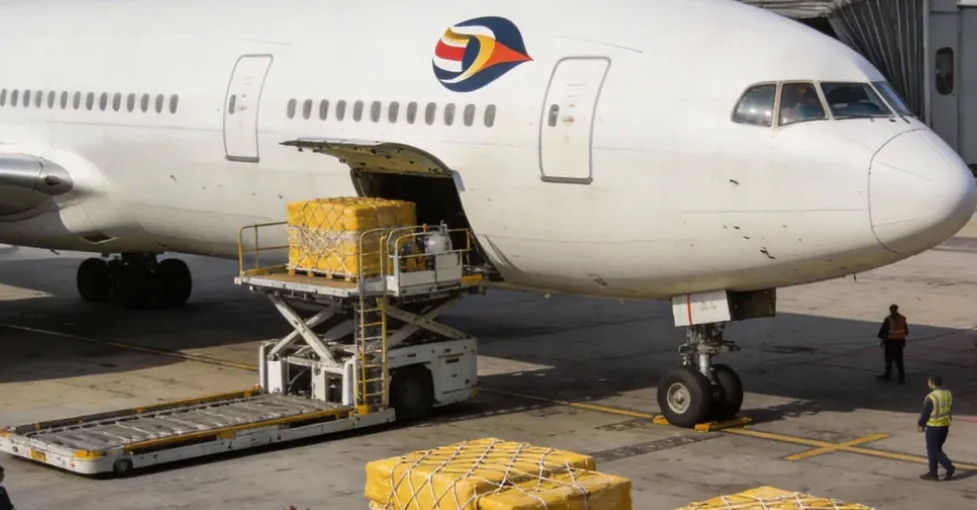
With over $7 billion in annual bilateral trade, Taiwan and Canada maintain a robust commercial relationship built on high-tech manufacturing, semiconductors, and industrial machinery. For businesses moving time-sensitive, high-value cargo across the Pacific, air freight from Taiwan to Canada is the fastest and most reliable shipping solution — but navigating rates, transit times, customs regulations, and carrier options can feel overwhelming without the right guidance.
Whether you are shipping electronics from Taipei to Vancouver, industrial parts to Toronto, or e-commerce parcels to Montreal, this complete guide breaks down everything you need to know in 2026. From real-world cost estimates and door-to-door transit timelines to CARM customs compliance and industry-specific packaging advice, you will walk away with a clear, actionable plan for your next air shipment.
Taiwan-Canada Air Freight Routes, Transit Times & Major Airports
Taiwan’s primary air cargo gateway is Taiwan Taoyuan International Airport (TPE) , one of Asia’s busiest freight hubs with strong trans-Pacific capacity. Kaohsiung International Airport (KHH) serves as a secondary departure point for southern Taiwan-based exporters. On the Canadian side, the three major entry airports are Vancouver International Airport (YVR) , Toronto Pearson International Airport (YYZ) , and Montréal-Trudeau International Airport (YUL) , with Calgary (YYC) handling a smaller share of cargo arrivals.
Direct passenger and cargo flights operate daily from TPE to YVR via China Airlines and EVA Air, with typical flight times of approximately 10.5 hours. Routes to Toronto and Montreal typically involve one stop, extending total air transit to 15–18 hours.
The table below summarizes realistic door-to-door transit times for different service levels on the Taiwan-Canada route:
| Service Level | Door-to-Door Transit | Best For |
|---|---|---|
| Express Courier (DHL/FedEx/UPS) | 3–5 days | Documents, samples, parcels under 50 kg |
| Express Air Freight | 4–7 days | Urgent commercial shipments, high-value electronics |
| Standard Air Freight | 5–8 days | Business cargo 100 kg+, regular commercial freight |
| Deferred / Economy Air Freight | 7–10 days | Non-urgent bulk shipments, cost-sensitive cargo |
While this guide focuses on Taiwan-origin cargo, many of the same carriers and Canadian gateway airports also serve air freight from China to Canada routes, and the transit time principles are broadly similar.
Several factors can affect actual transit times. Customs clearance speed at the destination airport is the most common bottleneck — incomplete documentation or incorrect HS code classification can add 1–3 days. Peak season congestion (Q3–Q4), airline schedule changes, and final-mile delivery distances to inland Canadian destinations also play a role. Planning shipments during off-peak windows and preparing documentation in advance are the two most effective ways to keep your timeline on track.
Air Freight Costs from Taiwan to Canada: 2026 Rates & Pricing Factors
Air freight pricing on the Taiwan-Canada corridor varies by route, shipment volume, and service speed. The table below provides indicative all-in air freight rates (base freight plus standard surcharges) as of mid-2026:
| Route | Standard Air (USD/kg) | Express Air (USD/kg) | Typical Shipment Size |
|---|---|---|---|
| TPE → YVR (Vancouver) | $3.50 – $5.20 | $4.80 – $6.00 | 100–1,000 kg |
| TPE → YYZ (Toronto) | $4.00 – $5.50 | $5.00 – $6.50 | 100–1,000 kg |
| TPE → YUL (Montreal) | $4.50 – $6.00 | $5.50 – $7.00 | 100–1,000 kg |
Note: Rates represent door-to-airport estimates. Door-to-door service, customs brokerage, duties, and final-mile delivery add incremental cost. For comparison, shipping cost from China to Canada tends to run 10–15% lower per kg due to higher cargo volumes, though Taiwan’s ITA duty-free benefits can offset this on electronics. Rates are subject to fuel surcharge fluctuations and seasonal adjustments.
Understanding Chargeable Weight
Airlines do not simply charge by the kilogram on a scale. They use chargeable weight, which is the greater of actual gross weight and volumetric weight (also called dimensional weight). The formula is:
Volumetric Weight (kg) = (Length × Width × Height in cm) ÷ 6,000
For example, a pallet measuring 120 cm × 100 cm × 80 cm with an actual weight of 100 kg has a volumetric weight of (120 × 100 × 80) ÷ 6,000 = 160 kg. The airline charges for 160 kg — not 100 kg. This is why lightweight but bulky shipments (such as foam packaging or empty boxes) can cost more than expected. Smart shippers compress packaging and stack efficiently to minimize volumetric waste.
What Drives Air Freight Rates
Several surcharges layer on top of the base rate:
- Fuel Surcharge (BAF) : Fluctuates with global jet fuel prices; typically adjusted monthly.
- Peak Season Surcharge (PSS) : Applied when airline capacity tightens, usually Q3 (back-to-school and holiday inventory buildup) through early Q4.
- Security Surcharge: Covers mandatory screening and secure handling at origin and transit airports.
- Terminal Handling Charges: Fees for cargo processing at both TPE and the destination Canadian airport.
Seasonality matters more than most shippers realize. The cheapest windows to ship air freight from Taiwan to Canada are January through March and September through October. Q4 (November–December) and the weeks immediately following Chinese New Year see the highest rates as capacity is absorbed by holiday retail and post-holiday factory catch-up shipments.
Worked Cost Example
Here is a realistic pricing scenario for a mid-size shipment:
| Cost Component | Details | Amount (USD) |
|---|---|---|
| Shipment | Electronics components, 120 kg actual / 140 kg chargeable | — |
| Air Freight (TPE → YYZ, Standard) | 140 kg × $5.00/kg | $700 |
| Fuel & Security Surcharges | Included in above rate | $0 |
| Export Documentation & Handling | Origin fees at TPE | $85 |
| Air Waybill (AWB) Fee | Carrier documentation | $25 |
| Canada Customs Brokerage | Brokerage service fee | $75 |
| Customs Duty | WTO ITA — 0% for electronics (HS 8473.30) | $0 |
| GST (5% on C$20,000 declared value) | Approximately C$1,000 | ~$720 |
| Final-Mile Delivery (Toronto area) | Local trucking | $95 |
| Total Door-to-Door (DDU) | — | ~$1,700 |
This example illustrates why understanding the difference between the air freight rate alone and the total landed cost is crucial. The base air freight ($700) represents less than half of the all-in door-to-door expense. For shippers who do not need air freight speed, LCL shipping from China to Canada offers significant cost savings — though transit times stretch to 30–45 days. Always request a comprehensive quote that includes all ancillary charges.
Door-to-Door Air Freight Process: From Taiwan Factory to Canada Doorstep
A successful door-to-door shipping from Taiwan to Canada operation involves five distinct stages. Understanding each one helps you anticipate requirements and avoid delays.
Step 1: Pickup & Origin Handling in Taiwan
The process begins when your freight forwarder collects cargo from your factory or warehouse. The forwarder palletizes and labels each piece, verifies the commercial invoice and packing list against the physical shipment, and transports the cargo to TPE or KHH. Proper labeling at this stage — including consignee name, destination address, and “MADE IN TAIWAN” marking — is essential for smooth downstream handling.
Step 2: Taiwan Export Customs Clearance
Your freight forwarder or customs broker files the export declaration with Taiwan Customs. Required documents include the Commercial Invoice, Packing List, and any export licenses applicable to controlled goods. Taiwan export clearance is generally efficient, typically completed within 1–2 business days for standard cargo.
Step 3: Air Transit
Once cleared for export, cargo is loaded onto the aircraft. Major carriers serving TPE-Canada routes include China Airlines Cargo, EVA Air Cargo, and Cathay Pacific Cargo. Your Air Waybill (AWB) number is generated at this stage — this is your primary tracking reference throughout the journey. Direct TPE-YVR flights land in approximately 10.5 hours, while connections to YYZ or YUL add 4–8 hours of transit and layover time.
Step 4: Canada Import Customs Clearance
Upon arrival, cargo is transferred to a bonded warehouse pending customs clearance. CBSA reviews the entry documentation — AWB, Commercial Invoice, Packing List, Certificate of Origin, and the ACI eManifest (advance cargo information filed before departure). This is where accurate documentation pays off. Incorrect HS code classification or missing certificates can trigger a physical examination, adding 1–3 days and inspection fees.
Step 5: Final-Mile Delivery
After customs release, the freight forwarder arranges trucking from the airport to the final destination. Delivery timelines vary by province: Vancouver-area deliveries may arrive same-day or next-day after clearance; Toronto and Montreal deliveries typically take 1–2 business days; remote or northern destinations may add 2–5 days.
| Process Stage | Typical Duration | Key Document |
|---|---|---|
| Taiwan Pickup & Export Clearance | 1–2 days | Commercial Invoice, Packing List |
| Air Transit (TPE → YVR) | 1–2 days | Air Waybill (AWB) |
| Canada Import Customs Clearance | 1–2 days | ACI eManifest, Certificate of Origin |
| Final-Mile Delivery | 1–3 days | Delivery Order |
| Total Door-to-Door | 4–10 days | — |
Canada Customs Clearance for Taiwan Imports: CARM 2026, Duties & Documents
The most significant regulatory change for Canadian importers in 2026 is the mandatory adoption of CARM (CBSA Assessment and Revenue Management) . All commercial importers must now register in the CARM Client Portal and obtain a Business Number (BN) with an import-export account from the Canada Revenue Agency (CRA). CARM digitizes the entire duty-payment workflow — if you are not registered, your shipment will not clear.
Required Documentation
Every air freight shipment from Taiwan to Canada must be accompanied by:
| Document | Purpose |
|---|---|
| Commercial Invoice | Describes goods, declares value, identifies seller and buyer |
| Packing List | Itemizes contents of each package, dimensions, weight |
| Certificate of Origin | Issued in Taiwan; required for preferential tariff treatment |
| Air Waybill (AWB) | Carrier-issued contract and tracking document |
| ACI eManifest | Advance cargo and conveyance data filed with CBSA before departure |
Duties & Taxes on Taiwan Imports
Canada applies the Most-Favored-Nation (MFN) tariff rates to goods originating from Taiwan. Importantly, Taiwan is a signatory to the WTO Information Technology Agreement (ITA) , which eliminates customs duties on a wide range of electronics and computer components. For example, HS code 8473.30 (computer parts and accessories) enters Canada duty-free under the ITA. This is a significant cost advantage for Taiwan’s dominant electronics export sector.
Beyond customs duty, all imports are subject to the 5% federal Goods and Services Tax (GST) . Depending on the destination province, additional taxes apply:
| Province | Tax Type | Combined Rate |
|---|---|---|
| British Columbia | GST (5%) + PST (7%) | 12% |
| Ontario | HST (13%) | 13% |
| Quebec | GST (5%) + QST (9.975%) | ~15% |
| Alberta | GST (5%) only | 5% |
Low Value Shipment (LVS) & Duty Thresholds
Shipments valued under CA$20 are exempt from both customs duty and GST/HST. Shipments under CA$3,300 qualify for Low Value Shipment (LVS) express clearance, which involves reduced paperwork and faster processing. Carriers typically charge a disbursement fee of approximately CA$20 for advancing duties and taxes on behalf of the importer.
Common Customs Mistakes to Avoid
Three recurring issues cause the majority of customs delays for Taiwan-Canada air freight:
- Incorrect HS code classification — leads to wrong duty rates, potential penalties, and inspection delays. Always work with a licensed customs broker to verify HS codes.
- Incomplete commercial invoices — missing details like country of origin, accurate value declaration, or itemized descriptions trigger CBSA review.
- Failure to register in CARM — without CARM portal access, your customs broker cannot release your goods. Register well in advance of your first shipment.
Industry-Specific Air Freight Solutions for Taiwan Exports
Taiwan’s export economy is concentrated in a few high-value sectors, each with distinct air freight requirements. A one-size-fits-all approach does not work.
Electronics & Semiconductors
Taiwan produces over 60% of the world’s advanced semiconductors, and air freight is the default shipping mode for these temperature-sensitive, high-value components. Key requirements include:
- ESD (electrostatic discharge) protection: Anti-static shielding bags, conductive foam, and grounded handling procedures are mandatory.
- Moisture barrier packaging: Humidity indicator cards and desiccant packs prevent oxidation of sensitive components during transit.
- WTO ITA classification: Ensure your customs broker classifies electronics under the correct ITA-covered HS codes to benefit from duty-free entry into Canada.
- Temperature monitoring: For high-end processors and wafers, consider active temperature loggers that record conditions throughout the journey.
Industrial Machinery & Parts
Heavy or oversized machinery components require specialized handling beyond standard air freight procedures:
- ISPM 15-compliant wooden crating: All solid wood packaging must be heat-treated and stamped to prevent pest introduction. Non-compliant crates are quarantined or destroyed at the importer’s expense.
- Oversized cargo: Items exceeding airline dimensional limits (typically 300 cm in any dimension) require prior approval and may incur substantial surcharges. Not all aircraft types can accommodate oversized pieces — your forwarder must verify aircraft compatibility before booking.
- Insurance: Machinery shipments often carry declared values in the hundreds of thousands of dollars. Comprehensive All-Risk cargo insurance is strongly recommended at 0.2%–0.5% of the declared value.
E-Commerce & Amazon FBA
For e-commerce sellers shipping from Taiwan to Amazon fulfillment centers in Canada:
- Small parcel consolidation combines multiple orders into one consolidated air freight shipment, dramatically reducing per-unit shipping cost versus individual courier shipments.
- FBA labeling requirements are strict: each carton must carry a unique FBA shipment label (generated in Seller Central), and each unit must be labeled with a scannable FNSKU barcode.
- DDP (Delivered Duty Paid) is the recommended shipping term for e-commerce — it provides an all-inclusive landed cost that simplifies pricing and ensures Amazon receives your goods without unexpected duty or tax demands.
DDP vs DDU Air Freight: Choosing the Right Shipping Terms for Taiwan-Canada Routes
The choice between DDP (Delivered Duty Paid) and DDU (Delivered Duty Unpaid) — now formally DAP (Delivered at Place) under Incoterms 2020 — has a major impact on cost predictability and the buyer’s experience. For Taiwan-Canada shipments specifically, DDP shipping from Taiwan to Canada provides an all-inclusive landed cost that simplifies cross-border e-commerce and first-time importing.
What DDP Covers
Under DDP, the seller or freight forwarder assumes responsibility for the entire logistics chain:
- Taiwan export customs clearance
- International air freight
- Canada import customs clearance and brokerage
- Payment of all customs duties, GST/HST, and any applicable provincial taxes
- Final-mile delivery to the buyer’s door
For the Canadian buyer, DDP means they receive a single, predictable invoice and their goods arrive without any surprise bills.
What DDU (DAP) Covers
Under DAP, the seller handles everything except import duties and taxes. When the shipment arrives in Canada, the buyer pays:
- Any applicable customs duty
- GST/HST (5%–15% depending on province)
- Customs brokerage and disbursement fees
- These costs are billed separately, often weeks after delivery, and can catch first-time importers off guard.
DDP Worked Cost Example
Here is a comparison using a realistic shipment: computer components, declared value $15,000 USD, 120 kg actual / 140 kg chargeable, TPE → Toronto (13% HST):
| Cost Component | DDP (All-In) | DDU/DAP (Excl. Duty/Tax) |
|---|---|---|
| Taiwan Pickup & Export Docs | $150 | $150 |
| Air Freight (140 kg × $5.50/kg) | $770 | $770 |
| Canada Customs Brokerage | $95 | $95 |
| Customs Duty (ITA — 0%) | $0 | $0 |
| GST/HST (13% on declared value) | Buyer pays separately | |
| Final-Mile Delivery (Toronto) | $120 | $120 |
| Total | ~$2,160 USD (all-in) | ~$1,135 USD + duty/tax |
The DDP total is higher upfront but eliminates uncertainty. For e-commerce sellers, first-time importers, and anyone who wants predictable landed costs, DDP is generally the better choice. For a broader analysis beyond this corridor, see our guide on DDP vs DDU: what’s the difference and which is better. Established importers who already have a Canadian Business Number, CARM registration, and a regular customs broker may prefer DAP for marginal cost savings.
NRI (Non-Resident Importer) Mechanism
For Taiwan-based sellers using DDP, the seller must act as the Non-Resident Importer (NRI) in Canada. This requires registering for a Canadian Business Number from the CRA. A competent freight forwarder handles this registration as part of their DDP service — confirm this capability when selecting a partner.
Packaging, Restricted Items & Cargo Insurance for Air Freight
Proper packaging and awareness of restrictions prevent damage, delays, and rejections at the airline cargo terminal.
Air Freight Packaging Standards
Airlines and ground handlers subject cargo to vibration, compression, and multiple transfers. Your packaging must withstand these conditions:
- Use double-wall corrugated cardboard boxes for shipments under 30 kg. Wooden crates certified to ISPM 15 standards are required for heavier or fragile machinery.
- Fragile items require at least 5 cm of cushioning (bubble wrap or closed-cell foam) on all sides, with “FRAGILE — HANDLE WITH CARE” labels on the top and at least two side faces.
- Single pieces should not exceed 30 kg for manual handling. Heavier pieces require forklift handling and may incur additional charges.
- The external carton must clearly display “MADE IN TAIWAN” — this is both a CBSA requirement and a practical measure that distinguishes Taiwan-origin goods from other origins.
- For e-commerce and FBA shipments, individual carton dimensions should not exceed L+W+H = 150 cm to avoid oversize surcharges.
Prohibited & Restricted Items
Some goods cannot be shipped by air at all, while others require special preparation:
| Category | Status | Notes |
|---|---|---|
| Dangerous goods (explosives, flammables, corrosives) | Prohibited | Absolute ban on passenger and cargo aircraft |
| Lithium-ion batteries (pure / power banks) | Generally prohibited | Some cargo-only aircraft may accept with special packaging |
| Battery-powered devices (installed batteries) | Restricted | Must be insulated, terminals protected, declared as dangerous goods |
| Liquids | Restricted | Sealed containers, single bottle ≤100 mL, total ≤1 L |
| Cosmetics, powders, pastes | Restricted | Require composition declaration; some ingredients restricted |
| Counterfeit goods, replicas | Prohibited | Seized by customs; legal consequences possible |
| Fresh food, meat, fruits | Prohibited | Phytosanitary risk; may carry pathogens |
| Prescription drugs | Prohibited | Not accepted without valid medical certificate |
Cargo Insurance: Do You Need It?
Short answer: yes, for any shipment you cannot afford to lose. Even with the safest carriers, cargo damage, theft, and loss occur. Air freight insurance is relatively inexpensive:
- All-Risk coverage: Protects against physical loss or damage from any external cause. Typical cost: 0.2%–0.5% of the declared value.
- Basic / Named Perils coverage: Covers only specified risks (fire, collision, theft). Cheaper but provides narrower protection.
When insuring, declare the full replacement value plus freight costs — undervaluing to save on premium defeats the purpose. In the event of a claim, you will need the AWB, commercial invoice, packing list, and photos of the damage. Most claims are resolved within 30–60 days.
Prevention remains the best insurance: sturdy packaging, correct labeling, and choosing a freight forwarder with a documented claims history are your first line of defense against cargo incidents.
How to Choose the Best Air Freight Forwarder from Taiwan to Canada
Choosing the right logistics partner directly impacts your shipping costs, transit reliability, and peace of mind. Whether you need a freight forwarder from China to Canada or a Taiwan-specialized forwarder, here is how to make an informed choice.
Courier vs Freight Forwarder
For small parcels under 50 kg and urgent documents, express couriers (DHL, FedEx, UPS) offer simplicity — door-to-door service with integrated tracking and customs clearance. However, per-kilogram costs are significantly higher than freight forwarder rates, and customization options are limited.
For commercial shipments above 50 kg, a specialized freight forwarder provides better value:
| Factor | Express Courier | Freight Forwarder |
|---|---|---|
| Best for | Parcels <50 kg, documents | 50 kg+ commercial freight |
| Rate (per kg) | $8.00–$15.00+ | $3.50–$7.00 |
| Service flexibility | Standardized | Customizable (consolidation, DDP, FBA prep) |
| Industry expertise | Generic | Route-specific, industry-specific |
| Volume discounts | Limited | Yes — significant at 500 kg+ |
Selection Criteria
When evaluating a Taiwan-Canada air freight forwarder, assess these factors:
- Route experience: How many Taiwan-Canada shipments do they handle monthly? A forwarder with consistent volume on this lane has stronger carrier relationships and better rates.
- Service range: Can they handle your full requirements — air freight, customs brokerage, DDP, insurance, and final-mile delivery — or will you need to coordinate multiple vendors?
- CARM expertise: With the 2026 CARM mandate, your forwarder must understand the new system and ensure your shipments comply. Ask specifically about their CARM readiness.
- Pricing transparency: A trustworthy forwarder provides itemized quotes with all surcharges, duties, and fees disclosed upfront. Beware of quotes that seem too low — hidden charges often follow.
- Communication & tracking: You should receive proactive status updates, not have to chase for information. Real-time online tracking via AWB number is the minimum standard.
Red Flags to Avoid
- Quotes that are significantly below market rate without explanation
- No physical office address in either Taiwan or Canada
- Unwillingness to provide client references or proof of customs broker license
- Unrealistic transit time promises (anything under 3 days door-to-door is improbable for standard air freight)
- Poor responsiveness during the sales process — communication rarely improves after you commit
Cost-Saving Tips for Taiwan-Canada Air Freight
Smart shippers use these strategies to reduce air freight costs without sacrificing reliability:
- Consolidate shipments: Combine multiple smaller orders into one larger shipment. Airlines offer significantly better per-kg rates at 100 kg, 300 kg, and 500 kg weight breaks.
- Ship during off-peak windows: January through March and September through October offer the most favorable rates. Avoid November–December and the weeks after Chinese New Year.
- Route through Vancouver (YVR) : As the closest Canadian gateway to Taiwan, Vancouver typically has the lowest air freight rates. For eastern Canada destinations, compare direct TPE-YYZ rates against TPE-YVR plus rail/truck — the latter is sometimes cheaper.
- Optimize packaging: Reducing unnecessary volume is the single most impactful cost lever. Every cubic centimeter of wasted space increases your chargeable weight.
- Verify HS codes before shipping: Correct classification can mean the difference between 0% duty under the ITA and a 5–10% tariff. Work with your forwarder’s customs broker to confirm codes before cargo departs.
- Build a long-term forwarder relationship: Regular volume earns preferential rates, priority space allocation during peak season, and more responsive service when problems arise.
FAQ: Air Freight from Taiwan to Canada
How long does air freight take from Taiwan to Canada?
Door-to-door transit typically ranges from 3 to 10 days. For sea freight timelines, how long does it take to ship from China to Canada by ocean is typically 25–40 days — a useful benchmark when evaluating mode trade-offs. Express courier services (DHL, FedEx) deliver in 3–5 days, standard air freight takes 5–8 days, and deferred economy service takes 7–10 days. The fastest airport pair is TPE to YVR, with direct flights taking approximately 10.5 hours in the air plus 1–2 days for ground handling and customs clearance.
How much does air freight cost per kg from Taiwan to Canada?
As of mid-2026, standard air freight rates range from approximately $3.50 to $6.00 USD per kg depending on the Canadian destination airport, with Vancouver being the most affordable gateway. Express air freight commands $4.80 to $7.00 USD per kg. Rates are based on chargeable weight (the greater of actual weight or volumetric weight) and vary with fuel surcharges, seasonality, and shipment volume.
What documents do I need for air freight from Taiwan to Canada?
The five essential documents are: Commercial Invoice (with accurate declared value and country of origin), Packing List (itemizing contents, dimensions, and weights), Certificate of Origin (issued in Taiwan), Air Waybill (AWB — issued by the carrier), and ACI eManifest (advance cargo information filed with CBSA before departure).
Can I ship electronics or batteries by air from Taiwan to Canada?
Electronics can be shipped by air freight and often benefit from duty-free entry under the WTO Information Technology Agreement (ITA). Battery-powered devices (with batteries installed) are classified as restricted goods — they require insulated packaging and dangerous goods declaration. Pure lithium-ion batteries and power banks are generally not accepted on passenger aircraft and face strict limitations on cargo-only flights.
Do I need cargo insurance for air freight?
Cargo insurance is not legally mandatory, but it is strongly recommended for any shipment with a value you cannot afford to lose. Air freight insurance costs approximately 0.2%–0.5% of the declared value for All-Risk coverage. Given that even top-tier carriers experience occasional damage or loss, insurance is a cost-effective safeguard — especially for high-value electronics, machinery, and consolidated e-commerce shipments.
What is CARM and do I need to register?
CARM (CBSA Assessment and Revenue Management) is the Canada Border Services Agency’s digital platform for managing commercial imports. As of 2026, all commercial importers must register in the CARM Client Portal and obtain a Business Number (BN) from the CRA. Without CARM registration, your customs broker cannot release your goods. Your freight forwarder can guide you through the registration process.
Is DDP or DDU better for shipping from Taiwan to Canada?
DDP (Delivered Duty Paid) is recommended for e-commerce sellers, first-time importers, and anyone who values predictable all-in costs. The forwarder handles all customs clearance, duty, and tax payments — you receive a single invoice and no surprise bills. DAP (formerly DDU) may save on brokerage fees for established importers who already have their own customs broker, CARM registration, and import processes in place.
How can I reduce air freight costs from Taiwan to Canada?
The most effective strategies are: consolidate smaller shipments to reach better weight-break rates, ship during off-peak months (January–March or September–October), route through Vancouver for the lowest gateway rates, optimize packaging to reduce volumetric weight, and build a consistent relationship with your freight forwarder for volume-based preferential pricing. If your business also ships to the United States, take a look at our guide on air freight from Taiwan to USA for US-specific rates and customs requirements.
Shipping by air from Taiwan to Canada does not need to be complicated. With the right freight forwarder, you get competitive per-kilogram rates, door-to-door transit in as little as 3–5 days, expert CARM customs clearance, and full visibility from TPE departure to final delivery. Whether you need standard air freight for electronics, DDP service for your e-commerce business, or specialized handling for industrial machinery, Dantful.US provides cost-effective, end-to-end air freight solutions tailored to Taiwan-Canada trade. Reach out today for a free, no-obligation shipping quote and see how much you can save on your next shipment.